





AIHS BWCSafety
0 200x200 1

WHS and OHS Audits that show where you really stand

A WHS audit will tell you if your safety system is working on the ground, not just on paper. BWC Safety tests your systems, culture and daily work practices against WHS and OHS laws and ISO 45001. You receive frank, independent advice and a clear plan of what to tackle first.

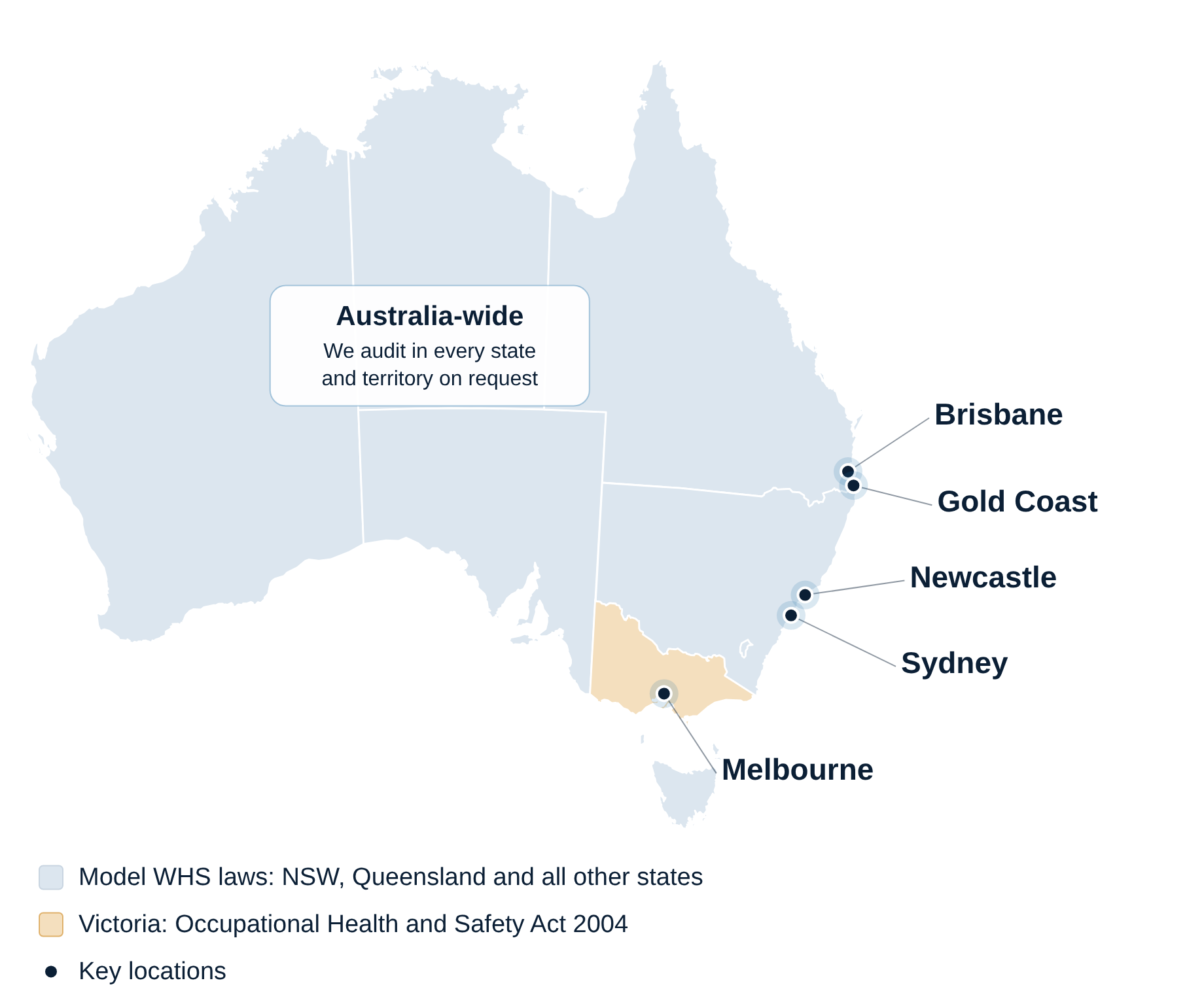
We audit businesses of all sizes, from a single site to multi-site operations across the country. We conduct WHS audits in Sydney, OHS audits in Melbourne and WHS audits in Brisbane, plus sites throughout Australia.

Excellent 5/5 Rating on Google
TRUSTED BY ORGANISATIONS ACROSS AUSTRALIA

WHS and OHS Audits in your city

State-by-state safety laws vary. Select your city to view how we audit against the rules that apply to you.

What is a WHS audit and why is it important?

A WHS audit is an independent assessment of your business’s work health and safety management. It verifies your safety system, daily work practices and records against the law and best practice. Then it shows you what’s working, what isn’t and what to fix first. The same review is known as an OHS audit in Victoria.

There are many companies with a safety system that appears to be in order on paper. The gap only shows when someone gets hurt or a regulator turns up. An audit finds it first.

  • Officers have personal responsibilities. Under WHS laws, officers are required to take reasonable steps to verify that safety resources and processes are in place and being used. One of the most obvious ways to demonstrate that is by having an independent audit. Victoria’s OHS Act holds officers personally liable too.
  • The consequences are severe. Industrial manslaughter offences have now been passed in all Australian states and territories. Businesses can be fined millions of dollars, and individuals can be jailed.
  • It is easier to fix problems early. An audit identifies the vulnerabilities before they become an incident, claim or improvement notice.

Benefits of a WHS audit

A WHS audit provides you with an objective assessment of your safety and a clear plan to improve it. The main benefits:

The real truth, not the written truth

People tell an independent auditor things they won’t tell their manager.

Evidence of due diligence

A documented, independent audit shows your officers have checked that the safety system works.

Lower risk

The fewer gaps, the less risk of incidents, claims, fines and prosecution.

Clear priorities

You know what to fix first, so time and money go where they matter most.

A benchmark

Compare yourself with best practice and ISO 45001, and monitor progress at the next audit.

An edge in tenders

Clients want proof of a strong safety system before they sign.

Safety-Consultant

What are the key areas covered in a WHS audit?

A good WHS audit will consider three things: your safety management system, how work is actually carried out and your safety culture. Within those, we review these key areas:

  • Leadership, governance and officer due diligence
  • Hazard identification and risk management, including your critical risks
  • Psychosocial hazards, such as job demands, bullying and harassment
  • Consultation with workers, health and safety reps and committees
  • Incident reporting, notification and investigation
  • Training, induction and competency
  • Contractor and supplier management
  • Emergency planning and response
  • Plant, equipment, hazardous chemicals and health monitoring
  • Documents, records and your legal register
  • Safety culture, or what people think and do when no one is looking

Each audit is tailored to your business. A 30-person business doesn’t require the same audit as a 3,000-person multi-site operation. The scope is agreed with you before we begin.

How our WHS audits work

We have multiple methods that test against one another, so the results are accurate.

Managing Psychosocial Hazards Assessment

1. Scope

We agree the sites, risks and standards in scope, including the WHS or OHS laws, codes of practice and ISO 45001.

Safety Consultants Sydney

2. System review

We audit your safety management system and records to the law and ISO 45001.

Workplace Safety Consultants Sydney

3. Confidential interviews

We talk one-on-one with a cross-section of your people, from the board to the front line. It is confidential, so people are free to speak.

Managing Psychosocial Hazards Review

4. Safety culture survey

An online survey across the business, based on 18 globally recognised safety culture characteristics.

Workplace Safety Consultants Brisbane

5. Site observations

We observe what is actually happening and compare it to what the system says.

Ohs Consulting Companies Melbourne

6. Report and presentation

You receive a clear report and an action plan, with the highest risks at the top. We present it to your executive team or board.

Need assistance after the audit? We can help you close the gaps, or pass the plan to your team to run with.

Couple conducting a Safety Audit Sydney

How can a WHS audit improve workplace safety?

A WHS audit helps to improve safety by identifying the difference between what your safety system says and what people actually do. Then it helps you fix the gaps that are most likely to harm someone.

  • It goes after the risks that kill. Most serious harm is likely to be caused by a few key risks. An audit tests the controls for those risks first.
  • It addresses the root cause, not the symptom. It doesn’t just look for hazards. It looks for the weak process that is causing them.
  • It provides workers with a voice. Confidential interviews and surveys reveal issues that people have been reluctant to discuss.
  • It gets leaders involved. When you share the results with your executive team or board, safety is on their agenda, with clear actions and owners.
  • It shows progress. The first audit establishes a baseline. The following one demonstrates the improvements.

WHS Audit requirements in Australia

For most businesses, no law says you must have a WHS audit. But the law does require you to manage risks so far as is reasonably practicable. It also requires officers to verify that your safety processes are in place and working. The most common method of proving both is by audit.

bwc audit locations map 1

Which laws apply

  • Every state and territory except Victoria has adopted the model WHS laws: a WHS Act, WHS Regulations and approved codes of practice.
  • Victoria has its own Occupational Health and Safety Act 2004 and OHS regulations. Hence the name OHS audits.

If you have sites in different states, each site should be audited to the laws of that state. The detail for NSW, Victoria and Queensland is covered in our city pages. The rest is covered in our guide to WHS legislation and regulations in Australia.

When an audit becomes a must

  • Building work funded by the Australian Government. Builders on these projects must be accredited by the Federal Safety Commissioner, and accredited builders are subject to regular audits.
  • ISO 45001 certification. Certification needs audits by an accredited certification body. We can get you ready for it.
  • Contracts and tenders. A lot of clients request proof of an independent audit before they award work.
  • Following a serious incident. A regulator, or an enforceable undertaking, may call for an independent audit.

How often should you have a WHS audit?

There’s no set legal timeframe. As a guide, most businesses will benefit from an independent audit every two years. Higher-risk operations should be audited every year.

There are some events that call for an audit earlier:

  • A serious incident or near miss
  • A big change, such as a new site, a merger, a restructure or a new CEO or board
  • New legislation or codes of practice that impact on your work
  • Prior to a tender, a certification audit or an upgrade to ISO 45001
  • Safety numbers that seem too good. A sudden drop in incident reports may indicate that people have stopped reporting.

Between audits, regular workplace inspections keep an eye on day-to-day hazards. Inspections and audits serve different purposes, and most businesses need both.

Professional WHS Audits Sydney
Safety-Consultant

What are the key areas covered in a WHS audit?

A good WHS audit will consider three things: your safety management system, how work is actually carried out and your safety culture. Within those, we review these key areas:

  • Leadership, governance and officer due diligence
  • Hazard identification and risk management, including your critical risks
  • Psychosocial hazards, such as job demands, bullying and harassment
  • Consultation with workers, health and safety reps and committees
  • Incident reporting, notification and investigation
  • Training, induction and competency
  • Contractor and supplier management
  • Emergency planning and response
  • Plant, equipment, hazardous chemicals and health monitoring
  • Documents, records and your legal register
  • Safety culture, or what people think and do when no one is looking

Each audit is tailored to your business. A 30-person business doesn’t require the same audit as a 3,000-person multi-site operation. The scope is agreed with you before we begin.

BWC Safety's Workplace Safety Consultants

Why BWC Safety

We have no software or certification to sell. We’re just here to tell you how safe you really are.

Our team includes ISO 45001 lead auditors with over 20 years of experience in the field.

We tell boards and executives what they need to hear, in plain English.

Our consultants have successfully delivered multi-year safety culture change in multi-site organisations.

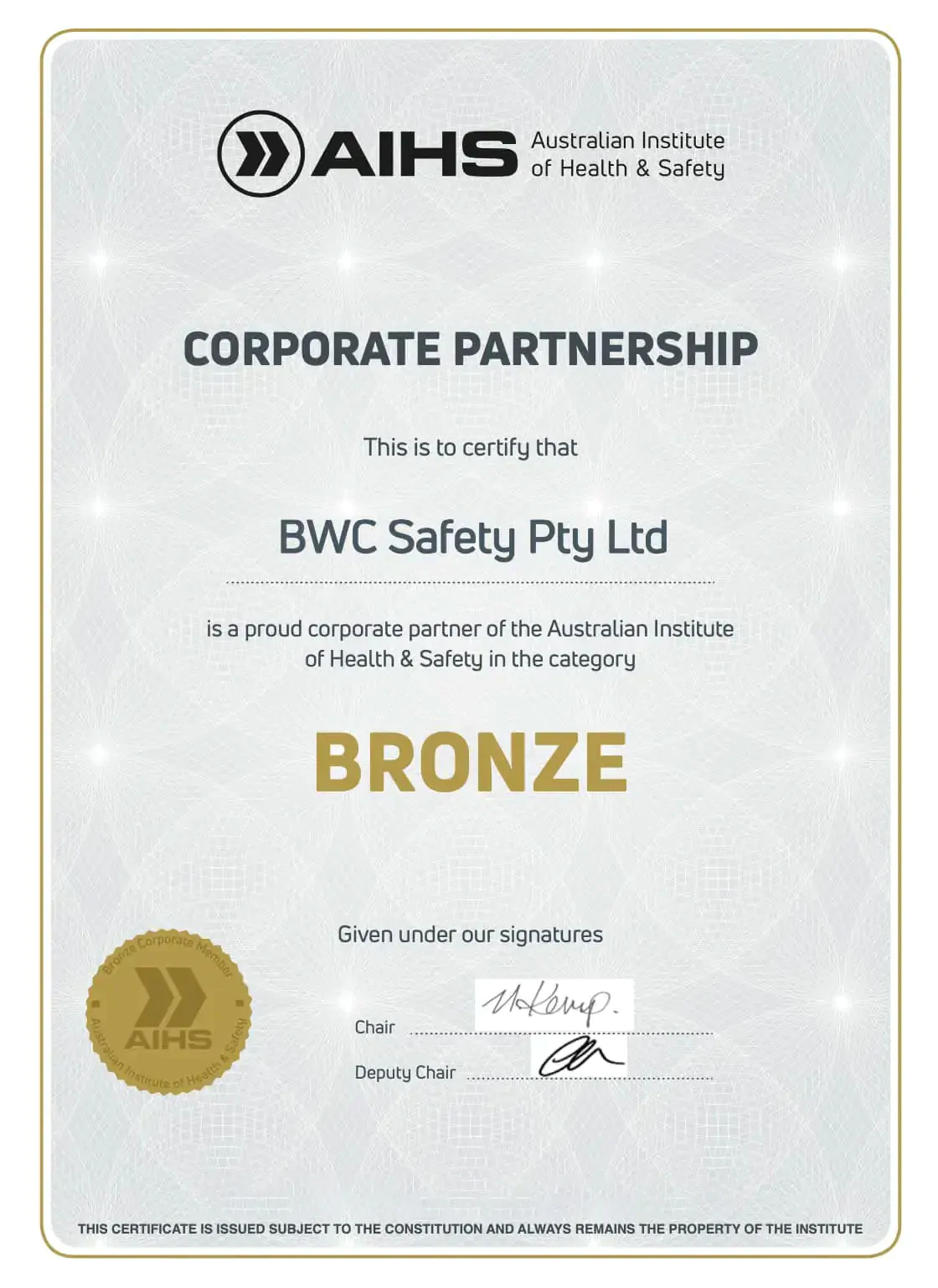
We’re a corporate partner of the Australian Institute of Health & Safety.

WHS audit FAQs

There is no formal pass or fail, and no penalty for the audit itself. The key is what you do after. A poor result indicates where you are exposed, allowing you to correct it before an incident or a regulator discovers it. You receive a ranked action plan, and we can help you work through it.

An inspection is a brief examination of a site, task or piece of equipment at one point in time. An audit is a more comprehensive examination of your entire safety system, culture and compliance. Inspections spot hazards. Audits check if the system designed to detect those hazards is effective.

This will depend on your size, the number of sites and the depth of the audit. A single-site review is much cheaper than a multi-site audit with a culture survey. Describe your business and we will provide you with a clear quote.

This will depend on your size and number of sites. For a smaller business, site work can take a day. Larger audits that include a culture survey take longer. We’ll give you a timeline with your quote.

Yes. We scale the audit to your size and risk, so you only pay for what you need.

No. We audit your system to ISO 45001 and identify the gaps. Certification itself is done by an accredited certification body. Many businesses use our audit to prepare for certification.

Yes. Interviews and survey responses are kept confidential. Themes are reported, not names.

AIHS BWCSafety
0 200x200 1

Book a WHS audit

Find out where your safety really stands, before someone else does. Choose your city to book, or call us for sites all over Australia.

Excellent 5/5 Rating on Google