


ICAM Investigations
When a serious incident happens, you need to know why. Our ICAM investigation consultants find the real causes and give you clear actions that stop it happening again.
- ICAM Lead Investigators
- Legal privilege work
- Australia-wide











How we can help
Every organisation handles incidents differently. We can lead the investigation for you, guide your team as they run it, or review one you’ve already completed.
Lead your investigation
It is run from start to finish by our ICAM Lead Investigators. Your people remain engaged, know the results and take responsibility for the actions.
Coach your team through it
Your team leads and we guide them at each step. We review the evidence, refine the analysis and ensure nothing is overlooked.
Examine a completed investigation
Already done one? Before you sign it off, we'll review the method, evidence and findings, and let you know what is missing.
Investigate under legal privilege
We often work with law firms, carrying out ICAM investigations under legal professional privilege on behalf of their clients.
What is an ICAM investigation?
ICAM is an acronym for Incident Cause Analysis Method. It is a systematic approach to investigating workplace incidents and finding their true cause.
Most incidents aren’t caused by one person making one mistake. They occur when multiple factors align: a gap in a control, a rushed job, an unclear procedure, a decision made months ago. ICAM is based on the research of Professor James Reason on the causes of organisational failure, and examines each of these layers.
The aim isn't to find someone to blame. The point is to discover the weaknesses in your systems, patch them up and prevent it from happening again.
– Bernie Walker
An ICAM incident investigation sorts the contributing factors into four groups:
01 / Absent or failed defences
The controls, barriers and checks that should have prevented the incident from occurring.
02 / Individual or team actions
What people did or did not do just prior to the incident, and why it was logical to them at the time.
03 / Task and environmental conditions
The circumstances of the day, including time pressure, equipment, weather, workload or layout.
04 / Organisational factors
The bigger picture: systems, training, resourcing, supervision and culture. This is where the root causes typically lie.
When you need an ICAM investigation
Not all incidents require a full ICAM investigation. These ones do:
Serious injuries or illness
Anything that causes a person to be in hospital or away from work for an extended period of time.
Notifiable incidents
Anything you have had to report to the safety regulator in your state.
High-potential near misses
This time no one was injured, but someone could have been.
Repeat incidents
It happens again and again, even after you've "fixed" it.
Independent investigations
When your board or client wants it investigated independently, and the results must stand up to outside scrutiny.
Not sure if your incident needs ICAM? Call us and we'll tell you right away.

Our ICAM investigation process
All investigations are conducted in the same seven steps. You will be aware of what is happening and what is to come at each stage.
01 / Tell us what happened
Call or send the form. We will discuss the initial steps, such as making the area safe and preserving the scene and evidence.
02 / Scope the investigation
We agree on what is in scope, who is on the team, the time frame and what the report will cover.
03 / Gather the evidence
Site inspection, photos, documents, records and interviews. ICAM's PEEPO checklist is used: people, environment, equipment, procedures and organisation.
04 / Build the timeline
We reconstruct the events that preceded, occurred during and followed the incident.
05 / Analyse with ICAM
We trace the contributing factors on the four layers and identify the root causes.
06 / Recommend fixes
Practical corrective actions, ranked in order of the hierarchy of controls, each with an owner and a due date.
07 / Report and debrief
A written ICAM report and a walk-through with your leadership team, or with your lawyers where the investigation is under privilege.

What's in your ICAM report
Our ICAM reports are written to be read, not filed. Your managers, your board and your regulator should all be able to follow them.
Each report includes:
- A brief overview of the incident and the reason for it
- A sequence of events
- The evidence we collected and the process of collecting it
- An ICAM analysis chart with all contributing factors included
- The root causes, in layman's terms
- Corrective actions, ranked, with suggested owners and due dates
- Key lessons you can share with your team
Why use an independent investigator?
Your own people know the site best. That’s also why it’s hard for them to investigate it.
No conflict of interest
Internal investigators may be too close to the team, the manager or the bad decision. We have no vested interest in the result.
People are more open
Employees are more likely to be open with someone outside their reporting line. That means better evidence and better findings.
No blame, only facts
We don’t point fingers at people. We look for gaps in your systems. There are too many reports that are biased against one person or team.
Findings that hold up
When a regulator, insurer or lawyer asks how you came to your conclusions, a clear, documented method fares much better.
Your team gets back to work
A serious incident is stressful enough. We carry the load, so your people can focus on running the business.

ICAM or 5 Whys?
Both are root cause analysis methods. They are used for different tasks, and we use both.
5 Whys (Quick check)
5 Whys is quick and simple. You ask "why?" until you get to the cause. It is suitable for small incidents where there is a single sequence of events.
ICAM (In depth)
ICAM takes it one step further. It examines all layers, from the day itself to the systems that underlie it. It's the best option for serious incidents, high-potential near misses, and complex or repeat incidents.
We’ll help you pick the right method for each incident, so you’re not over-investigating a paper cut or under-investigating a near miss.
Why BWC Safety
Our safety consultants work across Sydney, Melbourne, Brisbane, Newcastle and the Gold Coast, and we investigate incidents throughout Australia.
ICAM Lead Investigators
Every one of our investigators is ICAM trained and qualified to Lead Investigator level.
Trusted by law firms
Many of our ICAM investigations are carried out under legal privilege, for law firms acting on behalf of their clients.
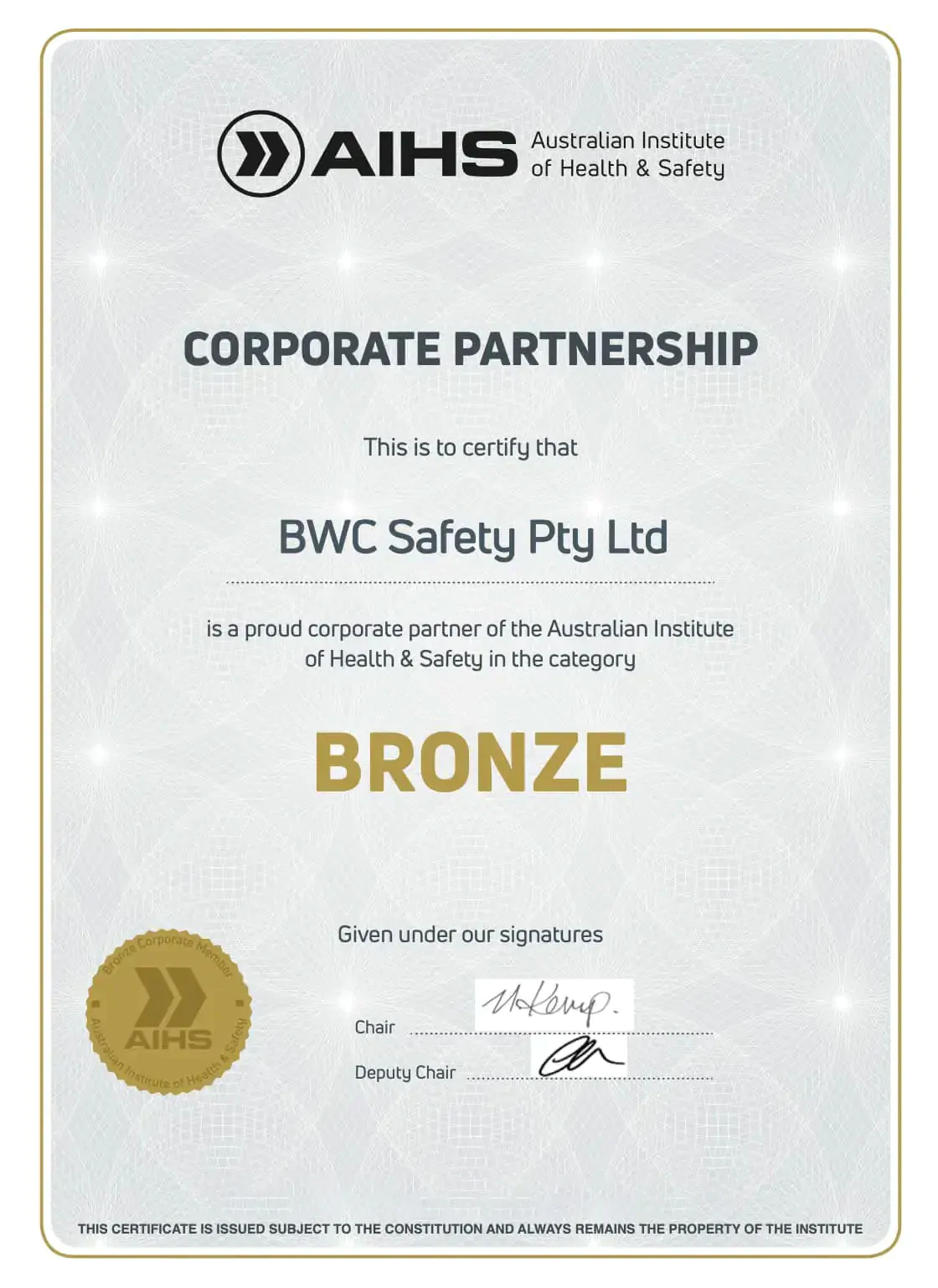
AIHS Corporate Partner
We’re a corporate partner of the Australian Institute of Health & Safety.
ICAM investigation FAQs
What does ICAM stand for?
Incident Cause Analysis Method (ICAM). It is a systematic approach to identifying all the causes of a workplace incident, including what occurred on the day and what systems enabled it.
Is an ICAM investigation a search for a scapegoat?
No. ICAM looks beyond individual mistakes to your system failures. When people know the intent is to solve the problem, not punish them, they are much more open.
How long does an ICAM investigation take?
Most ICAM investigations take about two weeks from start to finish. It depends on the incident and the number of people we need to talk to, so we’ll confirm the timeframe when we scope the job.
Can you review an investigation we’ve already completed?
Yes. We will review your approach, evidence and findings, and let you know what is good, what is missing, and what needs to be improved before you sign it off.
Can you investigate under legal professional privilege?
Yes. We often carry out ICAM investigations under legal privilege, working with law firms on behalf of their clients. Your lawyer can advise whether privilege should apply in your case.
When should we use ICAM instead of 5 Whys?
Apply 5 Whys to small incidents where there is one clear cause. For serious injuries, notifiable incidents, high-potential near misses and anything that continues to occur, use ICAM.
Do you work outside Sydney, Melbourne and Brisbane?
Yes. We are based in Sydney, Melbourne and Brisbane and investigate incidents throughout Australia, including the Gold Coast and Newcastle.

Make an Enquiry
Contact us to discuss your business safety requirements.